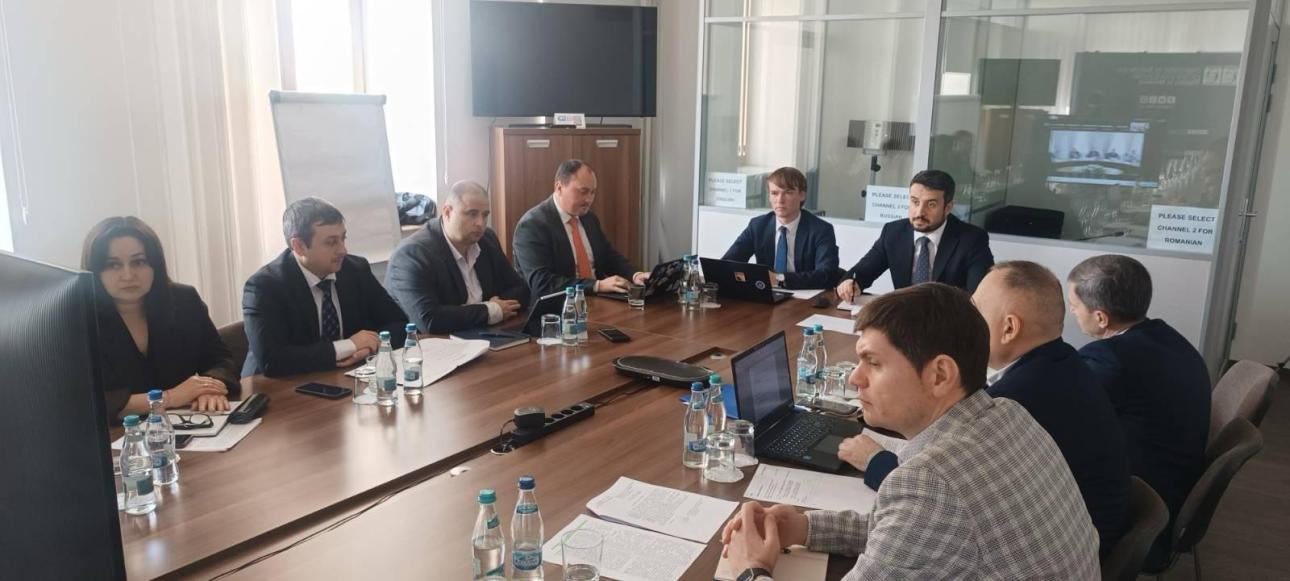
The first meeting of the working groups on car transport and infrastructure development this year

On March 17, 2026, the first meeting of this year of the working groups on car transport and infrastructure development was held online, with the participation of experts from both banks of the Nistru River.
Several topical issues were on the meeting agenda.
Regarding the activity of vehicle registration points in the cities of Tiraspol and Rîbnița (VRPs), Chișinău once again pointed out the existence of a number of systemic problems that have been repeatedly signaled and continue to negatively affect the functioning of the VRP mechanism. In particular, these include the improper organization of appointment scheduling and free access for applicants, as well as the inability of beneficiaries to obtain information in Romanian, which creates additional difficulties for citizens and reduces the effectiveness of this mechanism.
It was emphasized that the procedure for providing specialized services at vehicle registration points is regulated by the current national legislation, and compliance with these requirements is mandatory.
Attention was drawn to the fact that, as of the end of 2025, the statistics of neutral registration plates issued at the VRPs (14,000) and standard national registration plates provided to citizens of the Republic of Moldova residing in the Transnistrian region (24,000) clearly demonstrate the growing demand for Moldovan license plates.
In order to avoid obstacles to the free movement of citizens of the Republic of Moldova in the Transnistrian region, the necessity to remove the so-called vignette fees and other artificial barriers unlawfully introduced and maintained by Tiraspol was emphasized.
With regard to the implementation of the e-CEMT system and possible obstacles within the Transnistrian region perimeter that may affect the free movement of vehicles, cargo, and goods, it was agreed to continue dialogue in order to find practical solutions.
On the issue of the functioning of bridges over the Nistru River, the priority of ensuring road traffic safety was noted, as well as the need for a responsible approach to the technical condition of roads in the Transnistrian region. Chișinău once again stressed the need to ensure proper road quality in the interest of road infrastructure users.
In this context, experts from Chișinău highlighted the unsatisfactory condition of some bridges over the Nistru River and the need for urgent intervention on the Criuleni–Dubăsari bridge to prevent potential risks.
Chișinău confirmed its readiness to carry out an assessment of road conditions in the Transnistrian region and subsequently perform repair works, provided that all barriers to free movement across the Nistru River are removed.
Regarding the issues raised by experts from Tiraspol, Chișinău emphasized that the participation of drivers from the region in international road traffic is possible only if they hold driver’s licenses issued by the Republic of Moldova, in accordance with current national and international standards.
In order to develop practical solutions in the interest of drivers from the Transnistrian region and to advance work in this direction, experts from Chișinău proposed a gradual transition of the driving schools from the region to the requirements of the current national and international regulatory framework.
Concerning the issue of ambulances, it was emphasized that clear and functional solutions exist from a legal standpoint. At the same time, it was noted that against the backdrop of growing demand for medical services among residents of the region – in 2025 the number of insured persons reached nearly 75,000 – it is necessary to ensure the free movement of ambulances from the right bank of the Nistru River and the possibility of unhindered access to available medical care through the single national “112” service.
Chișinău once again emphasized the importance of maintaining a pragmatic dialogue focused on concrete solutions in the interest of citizens on both banks of the Nistru River, noting that any sustainable progress is only possible through the application of a single regulatory framework and the abandonment of unilateral approaches.