
Governmental Commission for Country Reintegration held a new meeting
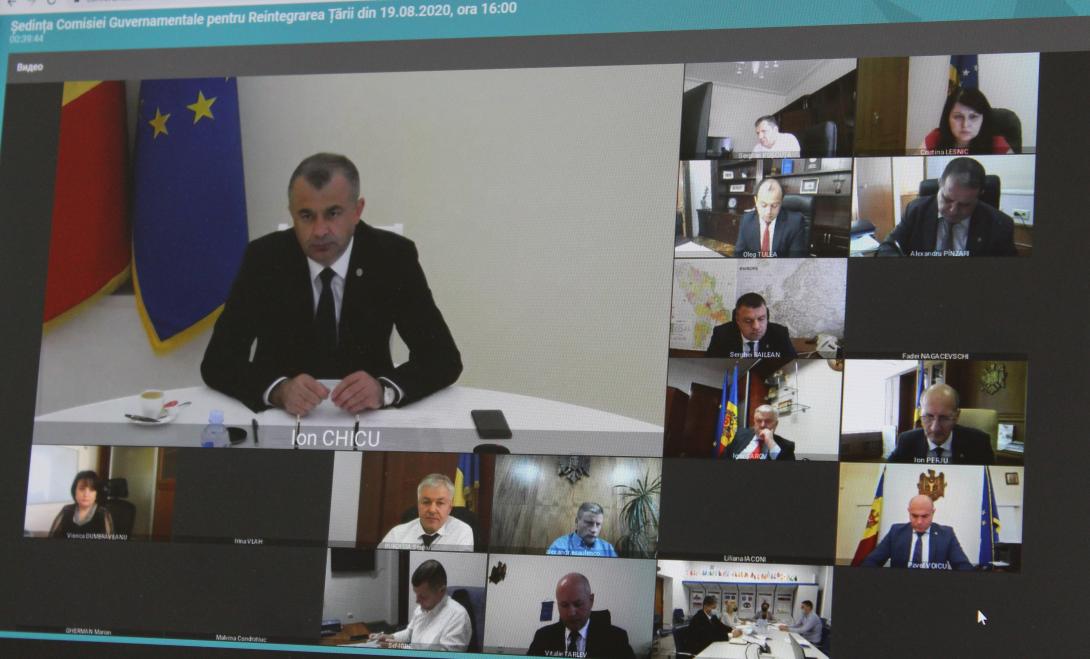
The meeting of the Governmental Commission for Country Reintegration took place today to address the current situation in the Transnistrian conflict settlement, the state of play in the Security Zone, telecommunications and other topics of interest.
The Deputy Prime Minister for Reintegration, Cristina Lesnic, informed about the evolution of the situation in the Transnistrian file, the impact of the new coronavirus pandemic on the interaction between Chisinau and Tiraspol, and about the efforts to unblock freedom of movement throughout this time.
During the pandemic, the Bureau for Reintegration provided assistance on more than 500 complaints, by constantly notifying the political representative from Tiraspol and the actors of the “5+2” negotiation format, and urging to unconditionally remove the unjustified barriers on free movement and to respect the inalienable rights of the citizens.
On 17 August, the 37 illegal checkpoints were reduced to 15 (and 4 blocked roads), which continue to impede free movement of the population.
Access via other means has become overcrowded, including the flow of people and goods via the ferryboat managed by SE “Bac Molovata”. Besides the extended work schedule and additional routes, alternative solutions need to be identified.
Cristina Lesnic presented the positive dynamics on registering Moldovan citizens (from the left bank) in the State Population Register, documents being issued in accordance with the legislation of the Republic of Moldova. Likewise, the dynamics on registering means of transport with neutral plates was presented to the members of the Commission – there were 4.070 vehicles registered and approximately 15 thousand driving licenses exchanged to the national model.
Another important issue targeted the dynamics of the sectoral Working Groups meetings, a total of 23 meetings being organized (while in 2019 – there were 21 meetings).
The unilateral actions applied by Tiraspol in the Security Zone violate the statutory acts of the Joint Control Commission and obstruct human rights, access to free movement, medical services and other humanitarian issues. Individual cases and complaints addressed to the Bureau for Reintegration were examined as a matter of priority.
It has been stated that certain processes and normative acts related to some economic activities in the Transnistrian region are to be adjusted and/or completed. Thus, there is a necessity to establish a Working Group to review the national framework and adapt to the current reality.
The situation in telecommunications to ensure the interconnection between both banks of Nistru, the level of the protocol decision implementation, difficulties and problems encountered, were also tackled.
The educational institutions teaching in Romanian from the Transnistrian region and mobility of students, teachers and auxiliary staff was a topical issue from the perspective of ensuring all the necessary conditions to remove barriers on free movement.
Members of the Commission exchanged views on results of the country reintegration meeting and on future steps in the process of strengthening confidence building measures on both banks of the Nistru river.
